Capturing an SSTV Image from the ISS in My Backyard
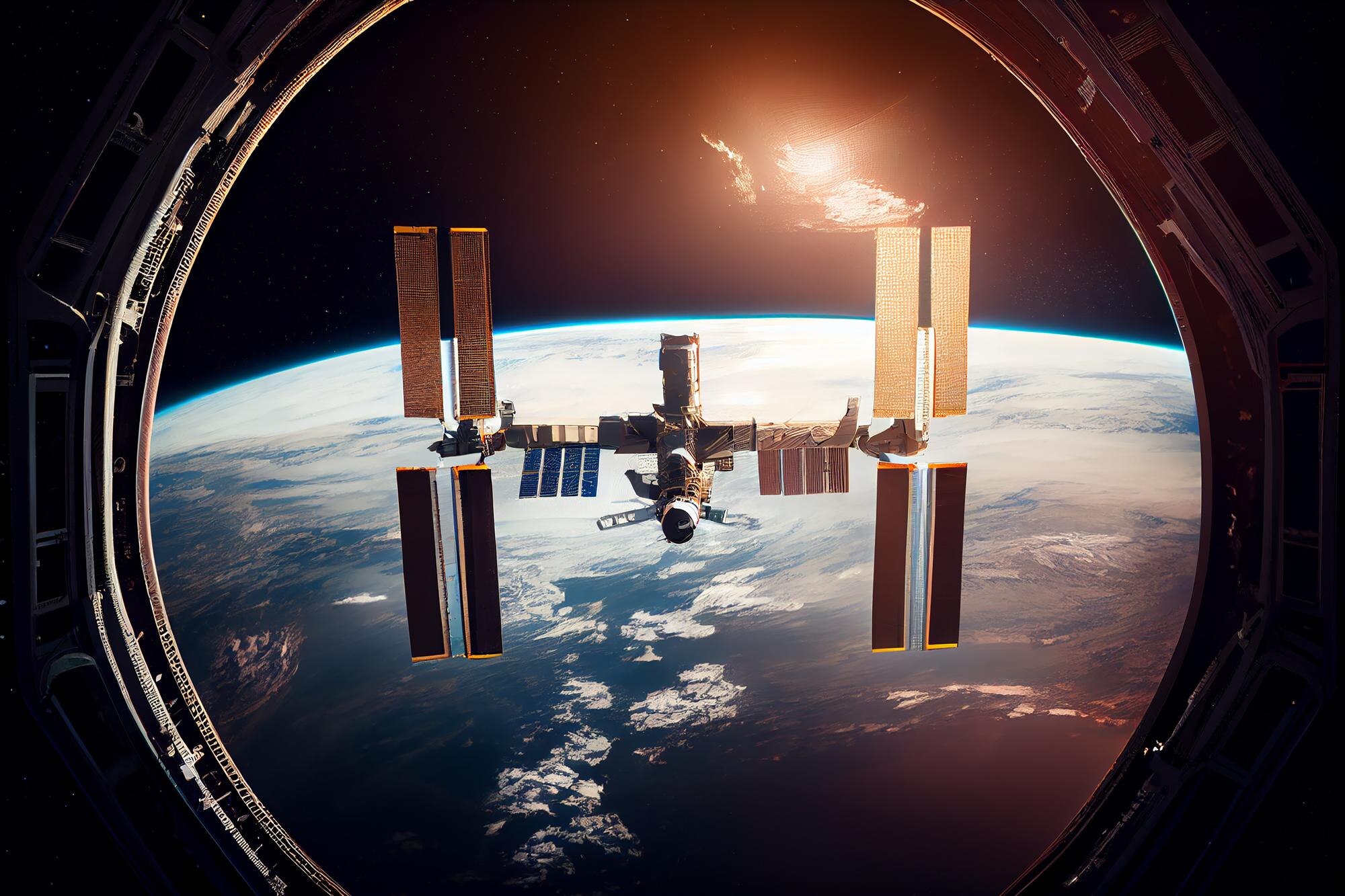
Last night, I had one of those quintessential geeky moments where technology, curiosity, and a bit of luck all came together. Armed with nothing more than my trusty RTL-SDR dongle, a makeshift antenna, and some free software, I set out to capture an SSTV (Slow Scan Television) image from the International Space Station (ISS) as it passed over my backyard.
A Perfect Evening for ISS Spotting
The timing couldn't have been better. The passover was at dusk, a magical time when the ISS catches sunlight and glints like a fast-moving star against the deepening blue of the sky. It's always a thrill to spot it, knowing there are humans aboard, orbiting Earth at 17,500 mph.
This particular pass had an added challenge: my neighbor’s house blocked the ISS for a good portion of the trajectory. I knew I wouldn’t get a complete image, but I decided to try anyway. After all, even partial success would be exciting.
The Gear and Setup
Here’s what I used:
- RTL-SDR dongle: A budget-friendly software-defined radio that opens up a world of listening possibilities.
- DIY antenna: My go-to V-dipole rigged for 145.8 MHz, the frequency the ISS transmits SSTV on during special events.
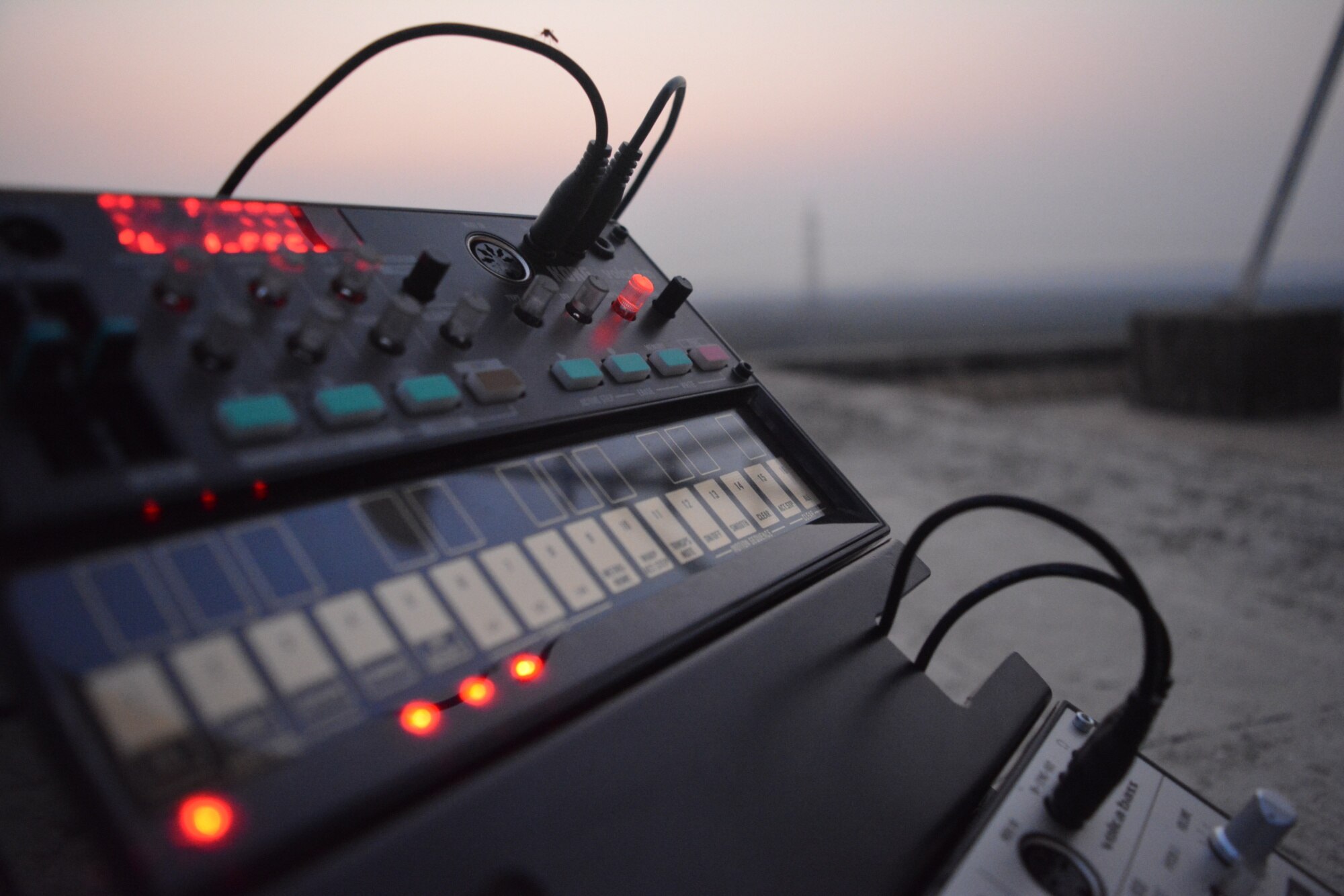
- Software:SDR# for tuning and MMSSTV for decoding the signal into an image. I connected everything to my laptop, dialed in the frequency, and waited for the pass.
The Magic of SSTV
As the ISS rose above the horizon, the faint hiss of static in my headphones began to give way to the characteristic tones of SSTV. It’s a kind of audio magic: those warbling signals transform into colorful, pixelated images.
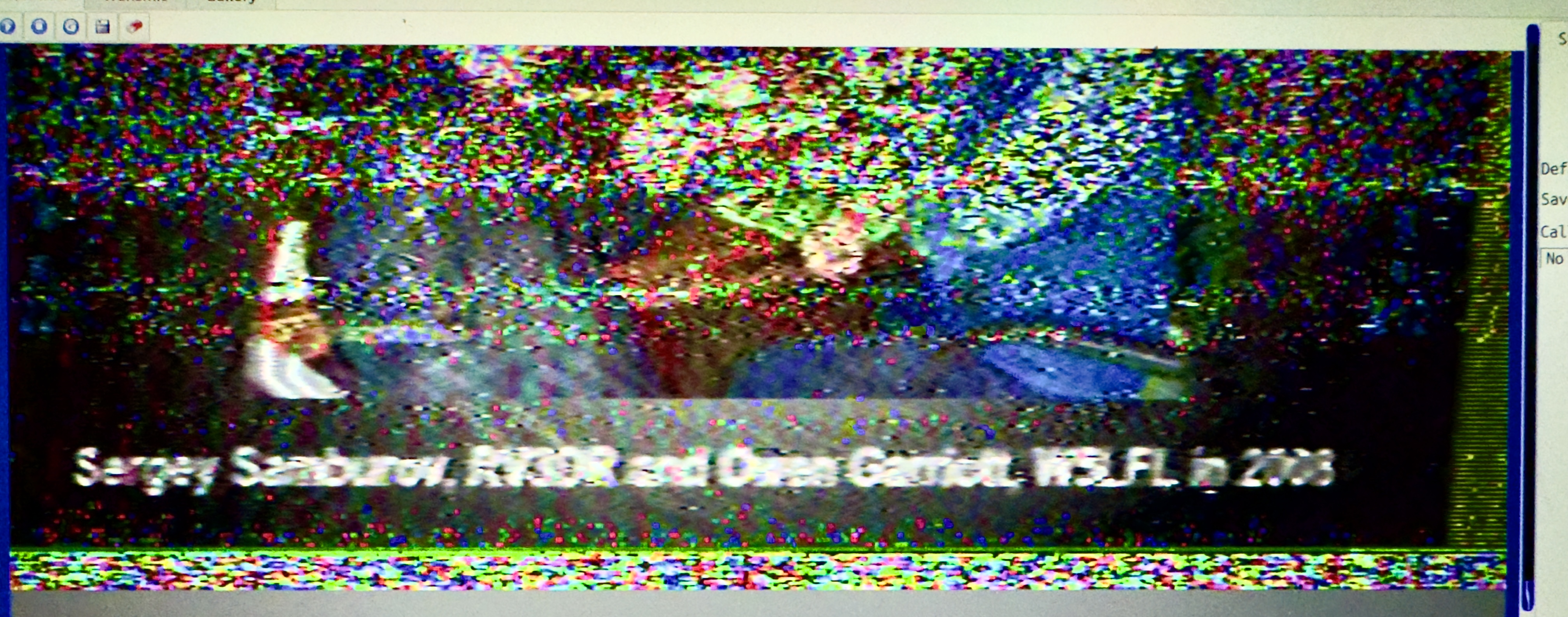
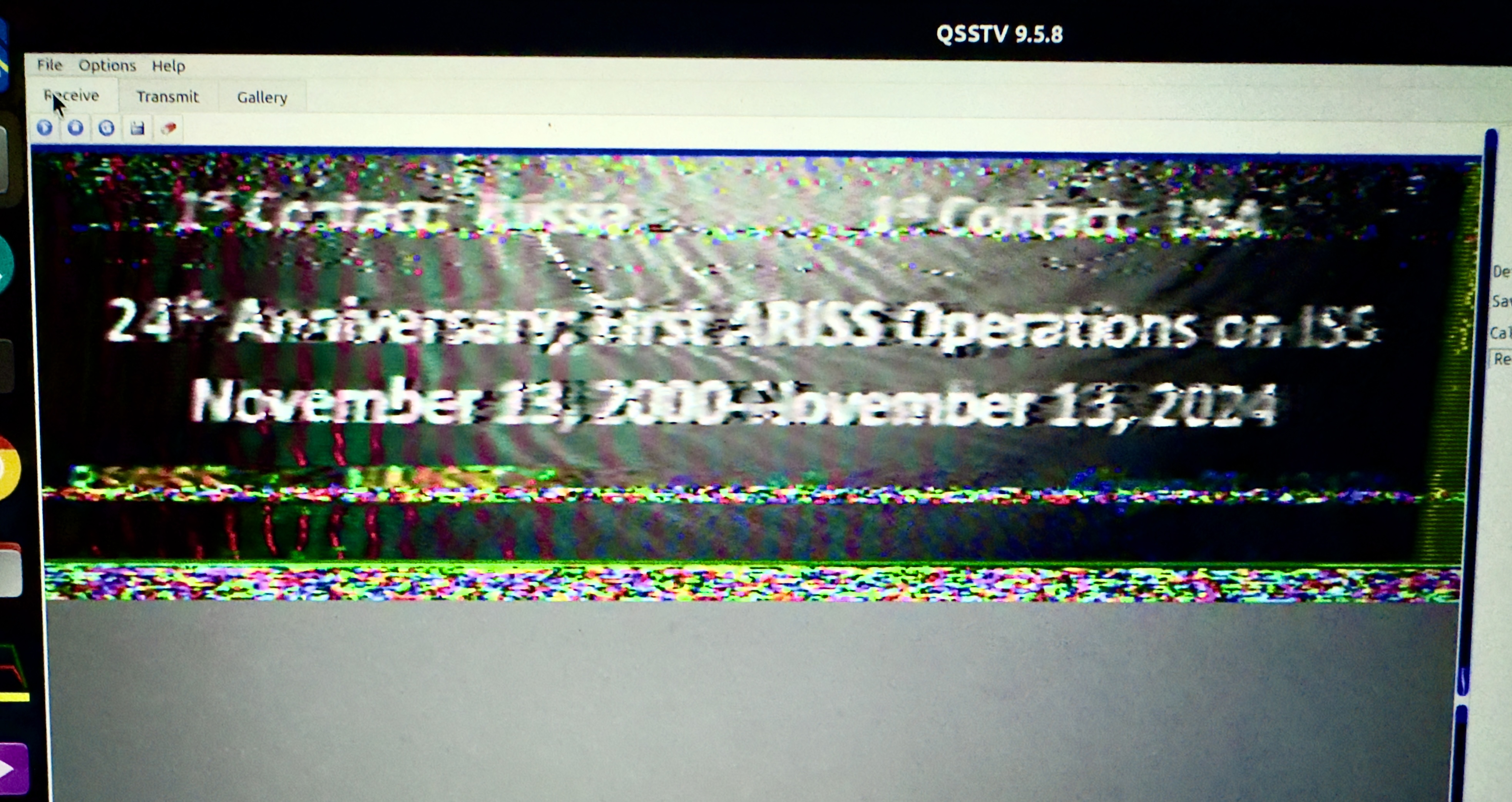
The ISS's signal was strong at first, but soon dipped behind my neighbor’s roof. I lost chunks of the transmission, resulting in a blank section across the middle of the image. By the time the ISS reappeared, the signal was weaker as it headed toward the horizon, but I managed to capture enough to see a partial SSTV image.
A Memorable Result
The image wasn’t perfect—far from it. But the beauty was in the experience: tracking the ISS, marveling at its bright solar panels reflecting the sun, and decoding its transmissions from space right in my backyard.
Even with the interruption, it was thrilling to watch an image slowly materialize on my screen, knowing it was beamed down directly from space. It reminded me that with just a bit of ingenuity, anyone can connect to the vast, incredible world of amateur radio and space exploration.
What’s Next?
I’m already planning for the next ISS SSTV event, this time scouting for a better location with a clearer view of the horizon. If you’ve never tried receiving signals from the ISS or other satellites, I highly recommend giving it a go. With an RTL-SDR, some free software, and a little patience, you can unlock the mysteries of the skies—right from your own backyard.